
Iraq ziyarat checklist: shrines, timing and etiquette
Every holy site on the classic route, the best season to travel, how to behave at the shrines and what to bring, in one place.
At a glance
- Main cities: Najaf, Kufa, Karbala, Kadhimiya (Baghdad), Balad and Samarra.
- Ideal length: 8 to 10 days to see every major shrine without rushing.
- Best weather: October to April.
- Dress: modest clothing for everyone; women wear an abaya or chador inside the shrines.
The shrines, city by city
Najaf
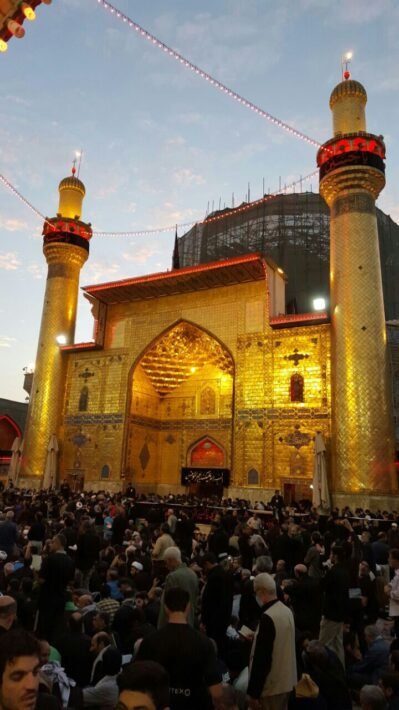
- Shrine of Imam Ali (a.s.), Amir al-Mu'minin, the heart of every visit to Iraq.
- Wadi al-Salam, one of the largest cemeteries in the world, with the shrines of the Prophets Hud and Salih (a.s.).
- Shrine of Kumayl ibn Ziyad, companion of Imam Ali and narrator of Du'a Kumayl.
Kufa
- Masjid al-Kufa, with its maqamat and a'maal, and beside it the shrines of Muslim ibn Aqil and Hani ibn Urwa.
- The house of Imam Ali (a.s.) next to the mosque.
- Masjid al-Sahla, especially visited on Tuesday nights.
- Shrine of Maytham al-Tammar.
Karbala
- Shrine of Imam Hussain (a.s.) and the shrine of his brother Abbas (a.s.), joined by the walkway of Bayn al-Haramayn.
- Tal al-Zainabiya and the site of the camp (Khaymagah).
- Shrine of Hurr al-Riyahi, on the edge of the city.
On the road: Al-Qasim
- Shrine of Qasim, son of Imam Musa al-Kadhim (a.s.), usually visited between Karbala and Baghdad.
Baghdad
- Kadhimiya: the shrine of Imam Musa al-Kadhim and Imam Muhammad al-Jawad (a.s.), where Shaykh al-Mufid and Khwaja Nasir al-Din al-Tusi are also buried.
- Tombs of the four deputies (al-Nuwwab al-Arba'a) of Imam al-Mahdi (a.j.).
- Mada'in: the shrines of Salman al-Farsi and Hudhayfa al-Yamani.
Balad
- Shrine of Sayyid Muhammad, son of Imam Ali al-Hadi (a.s.).
Samarra
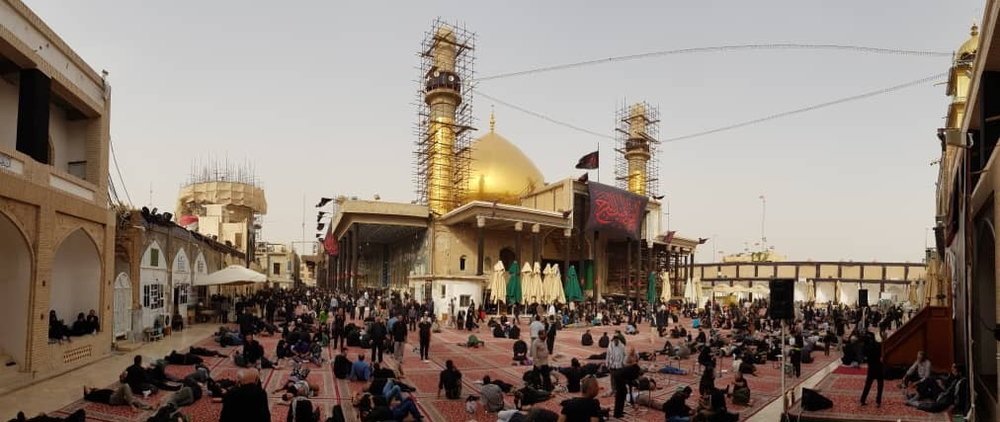
- Al-Askari shrine of Imam Ali al-Hadi and Imam Hasan al-Askari (a.s.), where Lady Narjis and Lady Hakima are also buried.
- The Sardab (cellar) associated with Imam al-Mahdi (a.j.).
Best time for ziyarat in Iraq
| Season | Weather | Crowds |
|---|---|---|
| October to November | Warm days, cooler nights | Moderate |
| December to February | Cool, occasional rain, cold nights | Quieter, good value |
| March to April | Pleasant | Moderate to busy |
| May to September | Very hot, often above 45 °C | Peaks at Muharram and Arbaeen |
Special dates such as Ashura and Arbaeen in Karbala, 15 Sha'ban, and Eid al-Ghadir in Najaf are unforgettable, but they are crowded and hotels cost more. If you want calm time at the zarih, choose an ordinary week in the cooler months. Read our Arbaeen 2027 guide if you plan to travel for Arbaeen.
Etiquette at the shrines
- Perform the ghusl of ziyarat if you can, and enter in a state of wudu.
- Dress modestly. Women wear an abaya or chador; chadors are often available at the women's entrances.
- Leave your shoes at the shoe-keeping counter (kishwaniya) and keep the token safe.
- Expect security checks at every entrance. Carry only a small bag, as large bags and some items are not allowed inside.
- Recite the permission to enter (idhn al-dukhul) before going in, then the ziyarat.
- Be gentle near the zarih: do not push, and give way to the elderly. Men and women have separate areas.
- Be discreet with photos and follow the instructions of the shrine staff.
Recitations to prepare
- Ziyarat Aminullah, suitable for every Imam and often recited in Najaf.
- Ziyarat Warith and Ziyarat Ashura for Imam Hussain (a.s.).
- The ziyarat of Abbas (a.s.).
- Ziyarat al-Jami'a al-Kabira, for any of the Imams.
- The a'maal of Masjid al-Kufa and Masjid al-Sahla, which are easiest with a guide.
Every Tatheer group travels with a scholar who leads the ziyarat and the a'maal in your language, so you do not need to memorise anything in advance.
Documents and packing checklist
- Passport valid for at least 6 months, visa and travel insurance
- Hotel confirmations and your return ticket
- Passport photos and copies of your documents
- US dollars in clean, recent notes, plus some Iraqi dinars
- A local SIM card (sold at the airport) or an eSIM
- Plug adapter: Iraq uses type C, D and G sockets at 230 V
- Slip-on shoes, modest clothing, and an abaya or chador for women
- Prayer mat, turbah and a ziyarat book or app
- Basic medicines, sunscreen and a water bottle
A sample 9-day route
- Days 1 to 3: Najaf and Kufa.
- Days 4 to 6: Karbala, with a stop at Al-Qasim on the way north.
- Days 7 to 9: Baghdad (Kadhimiya and Mada'in), Balad and Samarra, then departure from Baghdad.
See our ziyarat packages for this route in Standard, Premium and Ultra-Lux.
Frequently asked questions
How many days do I need for ziyarat in Iraq?
8 to 10 days covers all the main shrines comfortably. With 5 days you can visit Najaf, Kufa and Karbala, and add Kadhimiya if your flight leaves from Baghdad.
Is it safe to travel for ziyarat?
The shrine cities have heavy security and receive millions of pilgrims every year. Travel with an organised group, keep your documents with you, follow local guidance, and check your own government's travel advice before you book.
Can women travel for ziyarat?
Yes, many women travel with family or in organised groups, and the shrines have separate women's sections. Visa conditions for women travelling without a mahram depend on nationality, so we check your case before booking.
Visit every shrine with Tatheer
Tell us your dates, nationality and group size. We plan the full route with hotels beside the shrines, transport and a scholar-guide.